Al-Karak · JordanPlastic pyrolysis
Plastic that had nowhere to go, leaves here as fuel
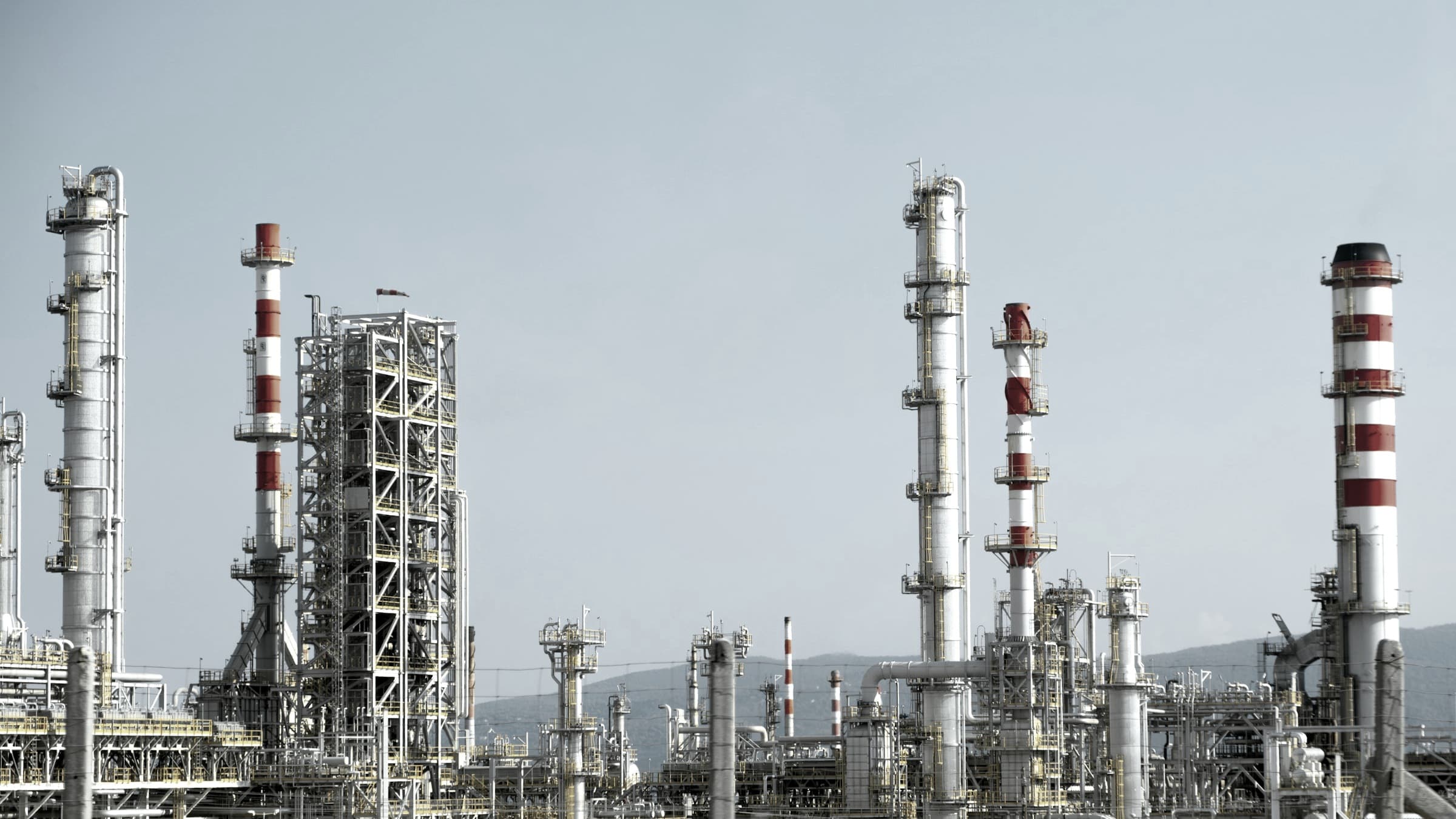
Jordan's first plastic pyrolysis facility. We hold hard-to-recycle plastic at 300–500°C with no oxygen in the chamber. It cannot burn — so it cracks, into diesel.
01 — The Challenge
A country that imports its fuel is burying the fuel it already has.
Mechanical recycling needs plastic that is clean, sorted and worth sorting. Greenhouse film caked in soil, mixed factory offcuts, multi-layer packaging — none of it qualifies. It goes to landfill, or it gets burned in the open.
That plastic is hydrocarbon. It came out of the ground as oil, and it is sitting in a landfill in a country that buys almost every litre of fuel it uses from someone else.
- 96%
- of Jordan's energy is importedWorld Bank / IEA, 2022 ↗
- roughly 300,000 tonnes
- of plastic waste a year — 15% of 2.1M tonnes of municipal wasteGreen Growth National Action Plan 2021–2025 ↗
- 7%
- of Jordan's solid waste is recycledGreen Growth National Action Plan 2021–2025 ↗
02 — How it Works
Without oxygen, plastic cannot burn. It cracks instead.
This is the part everyone assumes is incineration. It isn't. Burning needs oxygen — we take the oxygen away and apply heat anyway. The long polymer chains have nowhere to go but apart, and what comes off is hydrocarbon vapour. Cool it, and it is diesel.
- 01
Collect
Hard-to-recycle plastic is sourced across Jordan — greenhouse film, irrigation pools, factory offcuts and municipal waste that no mechanical recycler will take.
- 02
Shred
Feedstock is shredded and compacted into a uniform charge, sized so the reactor sees a consistent thermal load rather than a mixed one.
- 03
Pyrolyze
The charge is sealed into the rotary reactor and driven to between 300 and 500°C by the burner row beneath it. No oxygen goes in with it — and without oxygen, plastic cannot burn. It cracks instead. The long polymer chains break apart into hydrocarbon vapour.
- 04
Condense
Vapour is drawn off through the condenser bank and cooled back into liquid fuel. Gas that will not condense is captured and stored underground; carbon char is collected from the reactor.
03 — What comes out
Fuel made in Al-Karak, not imported.
Synthetic Diesel
Clean-burning, high-energy fuel alternative
- Generators
- Machinery
- Blending
Heavy Fuel Oil
HFOViscous industrial-grade oil for high-heat systems
- Cement
- Marine
- Kilns
Carbon Char
Carbon-rich residue with potential for reuse in low-grade combustion
- Low-grade combustion
- Internal use
- Resale
04 — The Plant
It is built, and it is running.
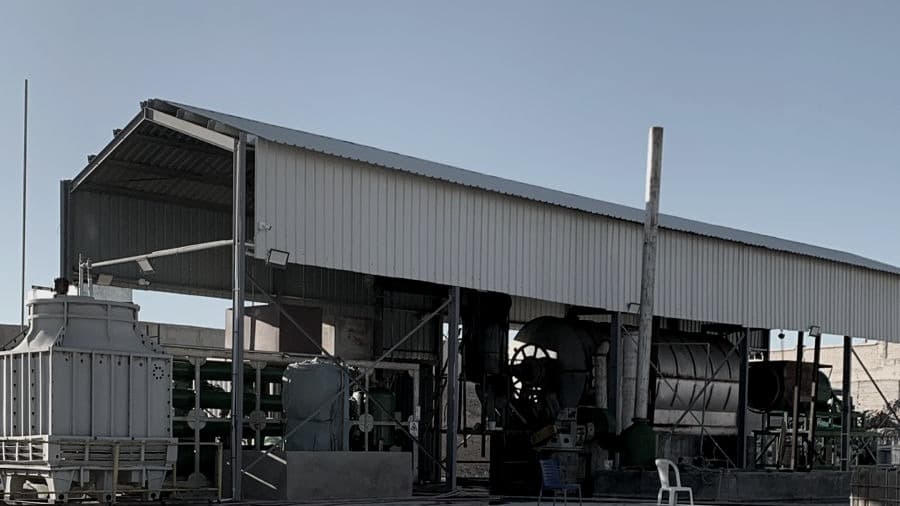
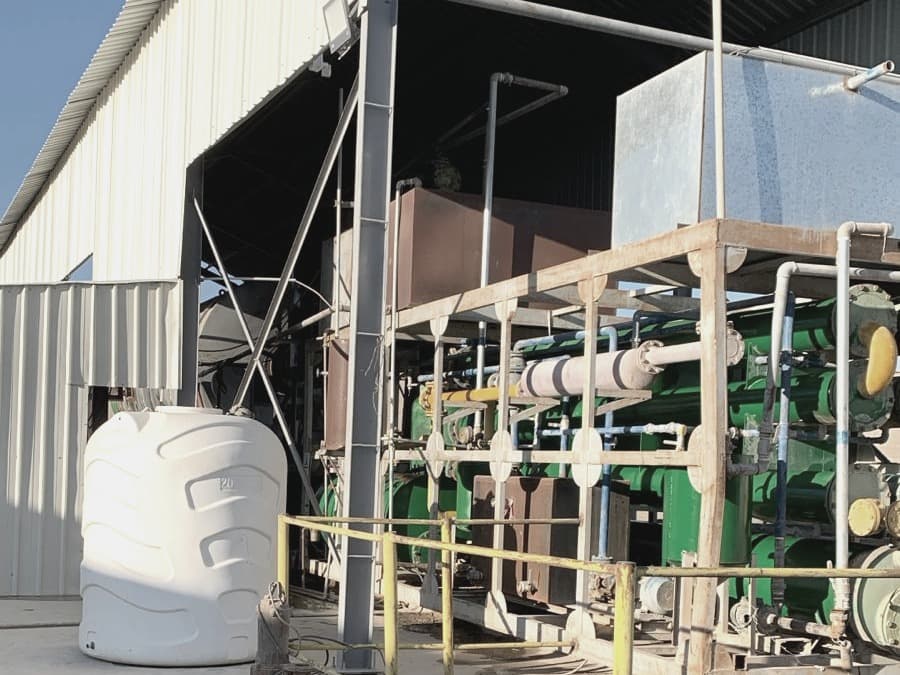
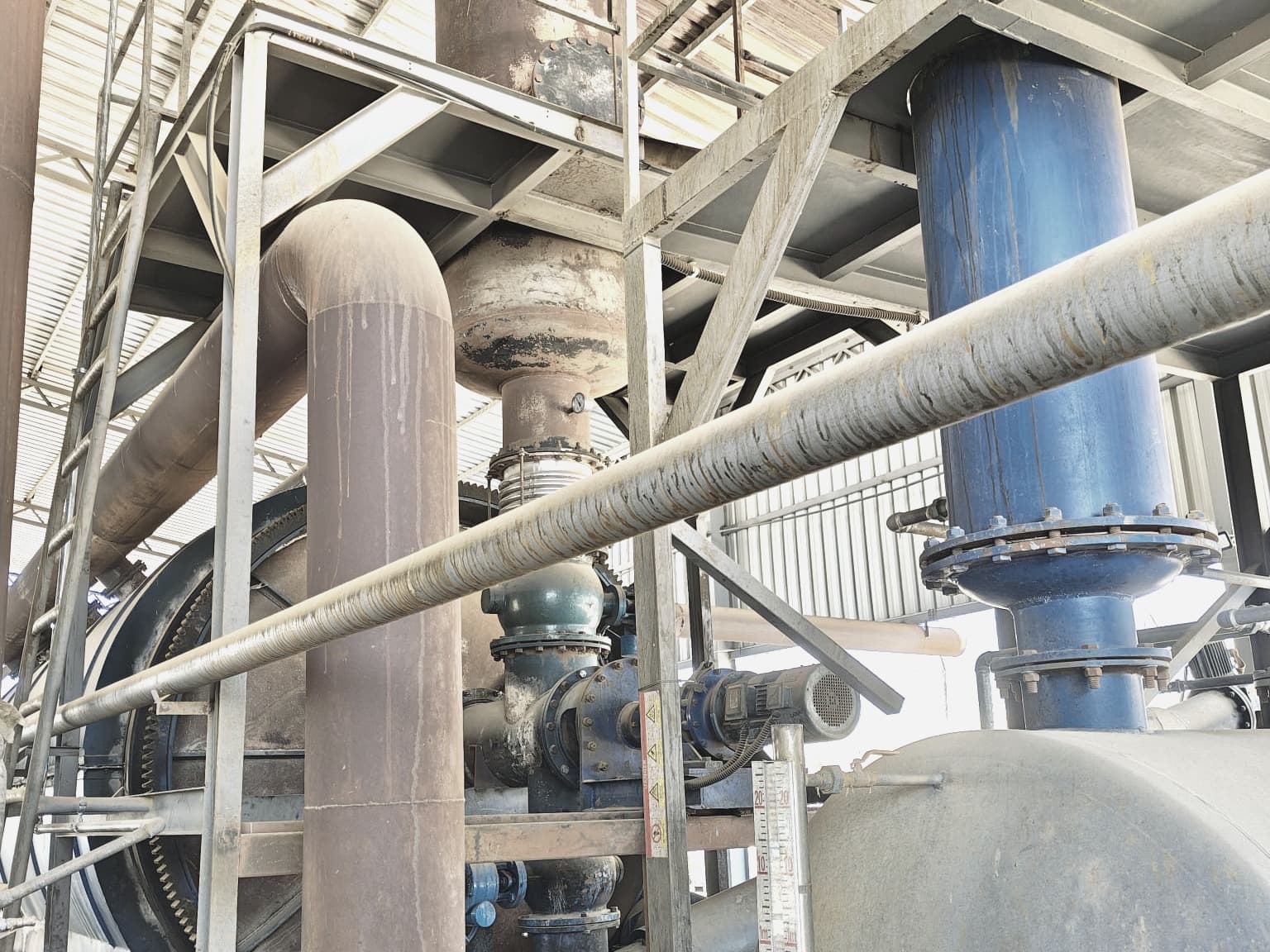
Al-Hussain Industrial City, Al-Karak, Jordan. A rotary reactor, a burner row, a condenser bank and the tanks the fuel leaves in. Every photograph below is our own plant — no renders, no stock.
- Location
- Al-Karak, Jordan
- Reactor temperature
- 300–500°C
- Oxygen in chamber
- None
05 — Talk to us
Three reasons to pick up the phone.
You have plastic waste
Farms, factories, municipalities and aggregators. If it is plastic and hard to recycle, it has value here instead of in a landfill.
Talk to us about supply→You need fuel
Synthetic diesel and heavy fuel oil for generators, kilns and industrial heat — produced in Al-Karak, not imported.
Request fuel pricing→You want to build this out
Investors and development partners backing waste-to-energy infrastructure in Jordan.
Request the deck→